Personality Assessments

Personality assessments reveal enduring traits and preferences:
how you think, relate, and respond to the world.

The Big Five

Openness – Conscientiousness – Extraversion – Agreeableness – Neuroticism

MBTI™

Sensing–Intuition
Thinking–Feeling
Judging–Perceiving

MIES™

Introversion
Extraversion

white colar worker collage around table in multiple colors

Understand “Who You Are” With Personality Assessments (Big 5, MBTI, MIES)

Personality assessments reveal enduring traits and preferences: how you think, relate, and respond to the world. They provide the baseline for self-awareness and cultural fit.

Personality assessments like the Big Five or MBTI help you understand your natural tendencies—how you think, relate, and respond to the world around you. They reveal enduring traits that shape your decision-making, communication, and cultural fit. By knowing your personality style, you gain a clearer picture of your strengths, blind spots, and how to best collaborate with others.
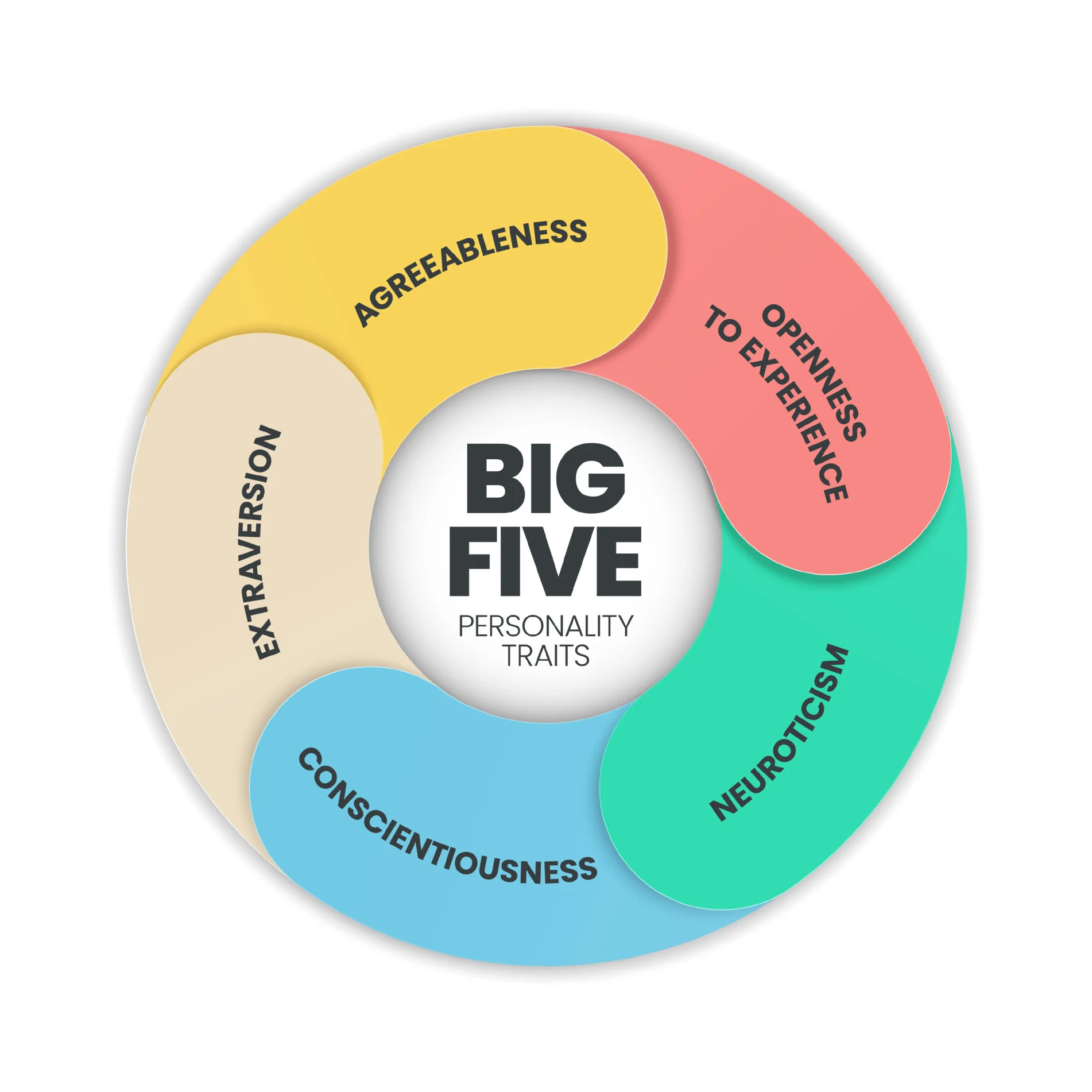
Big Five (OCEAN Model)

Gain a complete picture of your personality traits and how they influence performance, adaptability, and relationships.

What it does:
The Big Five measures Openness, Conscientiousness, Extraversion, Agreeableness, and Neuroticism—providing a comprehensive look at personality.

What you’ll gain

Understand how your personality shapes your strengths and blind spots

Predict workplace performance and cultural fit

Gain insight into how you relate, lead, and adapt
MBTI (Personality Assessment)

Discover your personality blueprint and how it shapes your world

What it does
The Myers-Briggs Type Indicator (MBTI) identifies personality preferences across four dimensions: Extraversion–Introversion, Sensing–Intuition, Thinking–Feeling, and Judging–Perceiving. It provides insight into how you process information, make decisions, and interact with others helping you better understand both yourself and those around you.

What you’ll gain

Recognize your natural preferences and strengths

Improve teamwork by appreciating different personality types

Make more confident decisions aligned with your personality style

MIES – Multidimensional Introversion-Extraversion Scales

Discover your personality blueprint and how it shapes your world.

What it does
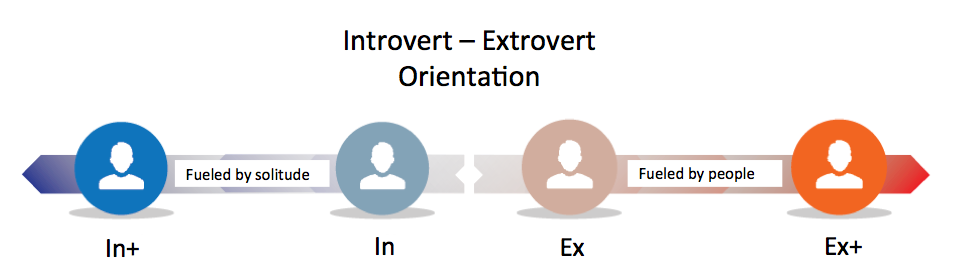
MIES breaks down introversion and extraversion into multiple dimensions, providing a nuanced understanding of social energy and interaction styles.

What you’ll gain

> Go beyond labels: see the full spectrum of your social tendencies

Understand when you thrive in solitude vs. collaboration

Leverage your natural style for productivity and well-being
Frequently asked questions about personality assessments

A personality assessment helps you understand your natural tendencies, preferences, strengths, blind spots, and interaction style. It can show how you think, communicate, make decisions, respond to stress, and relate to other people.

But personality is not destiny. It is one layer of self-awareness. The real value comes when personality insights are combined with work-fit, values, motivators, skills, life goals, and the actual demands of the career or role you are considering. This is why we offer the free and paid versions; you get value, but they are not the ‘secret sauce’ to mapping out career success.

The Big Five measures five broad personality traits: openness, conscientiousness, extraversion, agreeableness, and neuroticism. MBTI looks at preferences related to energy, information, decision-making, and structure.

The simplest way to think about it is this: Big Five helps describe personality traits. MBTI helps describe personality preferences. Both can improve self-awareness, but neither should be treated as a complete career-fit answer by itself.

MIES stands for Multidimensional Introversion-Extraversion Scales. It goes beyond the simple label of “introvert” or “extrovert” and helps you understand the different ways your social energy, interaction style, and work preferences may show up.

That matters because two people can both call themselves introverts but need very different work environments. One may thrive with deep solo work. Another may enjoy collaboration but need recovery time afterward. MIES helps add nuance to that picture.

You may learn more about your natural strengths, blind spots, communication style, decision-making patterns, collaboration habits, and preferred work environment.

A good personality assessment should not box you in. It should give you clearer language for understanding yourself and working better with others. The next step is turning that self-awareness into better career, leadership, or team decisions.

It depends on what you are trying to learn.

If you want a broad view of your personality traits, start with the Big Five. If you want to better understand your preferences and communication style, MBTI may be useful. If you want to better understand introversion, extraversion, and social energy, MIES may be a better starting point.

But if your real question is, “What kind of work fits me?” personality should not be your only starting point. You should also look at your values, motivators, work-fit, strengths, goals, and the real-world demands of the career path you are considering.

Yes. Personality assessments can help job seekers describe their strengths more clearly, prepare for interviews, understand communication preferences, and identify work environments where they are more likely to perform well.

But they should not be used as a shortcut for career direction. A job can match your personality and still drain you if the work does not fit your values, motivators, pace, responsibilities, or long-term goals. For job seekers, personality is helpful context. It is not the whole map.

Yes, but personality assessments should not be treated as career-direction tools by themselves.

For decades, people have used personality assessments to make career choices. The problem is, if personality tests were enough, we would not see the level of job dissatisfaction and disengagement we see today. Gallup reported that U.S. employee engagement fell to 31% in 2024, its lowest level in a decade. The Gallup 2026 study also reported that overall employee satisfaction returned to an all-time record low, while employees were looking for new jobs at the highest level since 2015.

Personality assessments can help you understand how you naturally think, communicate, collaborate, and make decisions. That is useful. But personality is only one part of career fit.

Choosing the right career also requires understanding your work-fit, values, motivators, skills, strengths, interests, energy patterns, life goals, and the actual demands of the role. Personality can help explain who you are, but it does not always tell you where you will thrive.

That is why Careerz Group believes personality assessments work best when paired with deeper career-fit tools and practical career guidance. The goal is not just self-awareness. The goal is better decisions, stronger alignment, and less time spent in work that looks good on paper but feels wrong in real life.

Yes, but employers should use them carefully.

Personality assessments can help employers understand communication style, leadership tendencies, collaboration preferences, and potential team dynamics. They can be especially useful for onboarding, coaching, manager development, and team communication.

However, personality assessments should not become a lazy pass/fail hiring filter. Hiring decisions should also consider role fit, job demands, values alignment, skills, structured interviews, work samples, experience, and the candidate’s ability to succeed in the actual environment.

The better question is not, “What personality type is this person?” The better question is, “Will this person thrive in this role, on this team, under these conditions?”

Careerz Group uses assessments to help people turn self-awareness into better career and workforce decisions.

Personality assessments help explain who you are. Other tools help clarify why certain work energizes you, how you tend to behave, what motivates you, and where you may fit best. That layered approach matters because career satisfaction rarely comes from personality alone.

The goal is not to collect assessment labels. The goal is to make better decisions about careers, hiring, coaching, development, and work-fit.

Passionate – Dedicated – Professional

latest news & insights

We connect real-world labor trends, human behavior, and practical tools so students, parents, and professionals can make smarter decisions about work.
Every post is built to turn confusion into clarity and “someday” ideas into next steps you can act on today.