
Employee Disengagement Crisis: How Passion-Based Hiring Solves It
The Hidden Crisis in Today’s Workplace
Why 70% of Employees Are Disengaged and How Passion-Based Hiring Fixes It
The Staggering Cost of Employee Disengagement
For more than 50 years, career planning has started in the wrong place.
Organizations have relied on skills assessments, personality tests, and résumé reviews to make hiring decisions. These tools describe what candidates can do, but they don’t define why they’ll thrive in your organization.
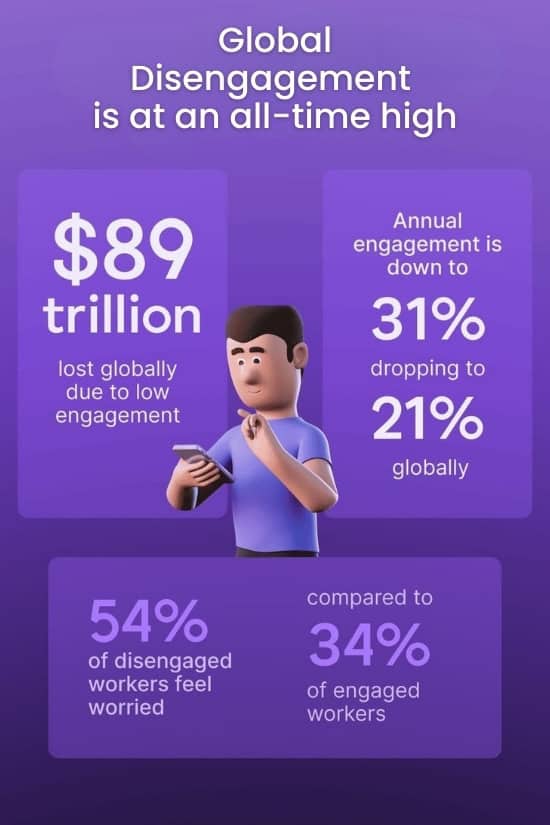
The result? Employee disengagement has reached crisis levels. Nearly 70% of workers today show up without genuine enthusiasm, passion, or commitment, according to Gallup’s latest research.
Let that sink in: Seven out of ten employees are physically present but emotionally absent. They go through the motions rather than bringing their best to the table.
This isn’t just a morale problem. Employee disengagement costs the global economy $438 billion in lost productivity every year.

The Real Numbers Behind Employee Disengagement
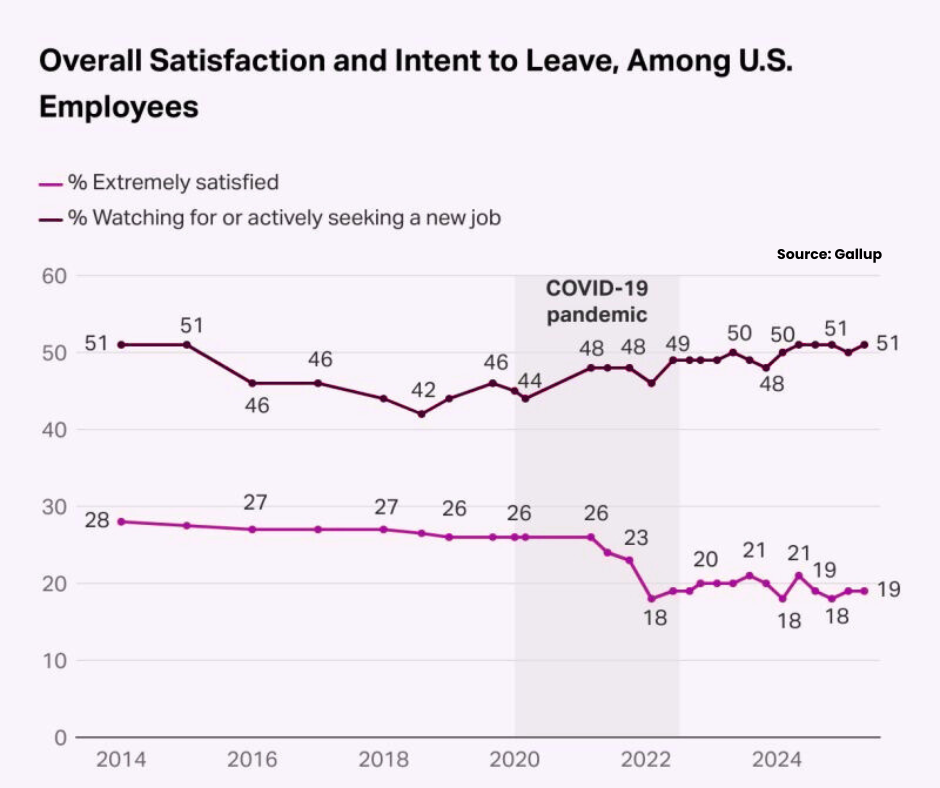
Gallup’s 2024 global workforce data reveals a troubling trend:
Only 21% of employees are engaged at work
Employee well-being has declined for the second consecutive year (from 35% to 33% “thriving”)
33% feel stressed daily
22% experience daily sadness
21% feel daily anger
For HR leaders, these statistics represent more than abstract data points. They’re warning signs flashing across every department in your organization.
High turnover. Low productivity. Cultural friction. Talent retention nightmares.
Sound familiar?
Why Employee Disengagement Starts With Skills-First Hiring
Here’s the uncomfortable truth: traditional hiring practices are fundamentally misaligned with what actually drives employee success.
When you screen candidates based primarily on skills, experience, and personality traits, you’re answering the wrong question. You’re asking:
“Can this person do the job?”
But you should be asking:
“Will this person love doing this job? Do their values align with our culture?”
There’s a massive difference.
An employee who can perform a role but doesn’t find joy in it will deliver mediocre results. They’ll disengage over time. They’ll start quietly planning their exit. They’ll contribute to that 70% statistic.
But an employee whose natural passions align with their daily responsibilities? They become unstoppable.
That’s the difference between competence and commitment. And it’s why employee disengagement persists despite decades of “best practices” in hiring.
The Passion-First Solution to Employee Disengagement
At CareerzWorkforce, we’ve flipped the script entirely.
Instead of starting with what you can do, we start with why you do it. Your passions. Your values. Your intrinsic motivations.
That’s the philosophy behind the Job Passion Type Indicator (JPTI)™, our proprietary online self-assessment tool designed to measure two critical factors that traditional hiring completely overlooks:
1. Passionate Engagement Through Strengths Alignment
The JPTI™ assessment identifies whether candidates will genuinely enjoy using the strengths required to excel in a given job function.
When employees love what they do, productivity doesn’t feel like work. It feels like purpose. They bring energy, creativity, and commitment that no amount of training can manufacture.
This directly combats employee disengagement by placing people in roles that naturally energize them.
2. Cultural Harmony Through Values Alignment
Measuring whether a candidate’s personal values align with your company’s core values can be a major factor in cultural harmony.
This alignment is the secret ingredient to building a harmonious corporate culture where employees feel they truly belong. It fosters loyalty, reduces turnover, and creates teams that collaborate effortlessly.
When values align, employee disengagement becomes nearly impossible. People stay because they want to, not because they have to.
What Happens When You Hire for Passion Instead of Skills Alone
Imagine this scenario:
You’re hiring for a customer success role. Two candidates make it to the final round:
Candidate A has an impressive résumé. Five years of experience, stellar references, and technical proficiency in your CRM platform.
Candidate B has less experience but scores exceptionally high on the JPTI™ for relationship-building passion and service-oriented values that align perfectly with your company culture.
Traditional hiring says: “Hire Candidate A—they’re the safer bet.”
Passion-first hiring says: “Hire Candidate B—they’ll thrive here.”
Fast-forward six months:
Candidate A is competent but disengaged. They handle tickets efficiently but lack warmth. Customers notice. Team morale suffers. Employee disengagement sets in.
Candidate B is a superstar. They genuinely care about solving problems, building relationships, and representing your brand. Customers rave about them. The team rallies around their energy.
This isn’t hypothetical. This is what happens when you screen for passion and values alignment using tools like the JPTI™.
The Three-Step Path to Eliminating Employee Disengagement
At Careerz Workforce, we help HR leaders solve employee disengagement through a simple, proven process:
Step 1: Deploy the JPTI™ Assessment
Our proprietary online self-assessment tool measures job-fit based on passion and values, not just skills. This immediately addresses the root causes of employee disengagement.
Step 2: Analyze & Align
We provide in-depth analysis of results to help you identify right-fit candidates who will excel and find joy in their roles.
Step 3: Transform Your Team
Hire passionate, culturally harmonious employees who drive productivity, reduce turnover, and elevate your entire organization. Watch employee disengagement disappear.
Why Solving Employee Disengagement Matters More Than Ever
The data is clear: employee disengagement is costing your organization more than you realize.
Every mismatched hire drains resources. Recruitment costs. Onboarding time. Lost productivity. Team disruption. The inevitable cost of starting the cycle all over again.
But here’s the good news:
You don’t have to settle for the status quo.
The tools exist to screen smarter, hire better, and build teams where passion and performance go hand in hand. You can reverse employee disengagement trends in your organization starting today.
Take the First Step Toward Ending Employee Disengagement
What if you could reduce turnover, boost productivity, and create a workplace culture where employees genuinely want to contribute?
It starts with understanding who your candidates really are, not just what’s on their résumé.
Ready to see the difference passion-based hiring can make?
👉 Sign up for a complimentary trial of the JPTI™ Assessment and discover how alignment transforms outcomes.
👉 Book a discovery call to explore whether the JPTI™ is the right fit for your organization.
The Bottom Line on Employee Disengagement
For decades, HR leaders have been handed outdated tools and told to “hire the best.”
But “the best” isn’t defined by skills alone. The best employees are those whose passions align with their responsibilities and whose values align with your culture.
That’s not wishful thinking. That’s the JPTI™ advantage. And it’s the proven path to solving employee disengagement once and for all.
Stop worrying about mismatched hiring. Start building a passionately engaged, culturally harmonious workforce.
Frequently Asked Questions About Employee Disengagement and Passion-Based Hiring
Thank you for following this six-part series on solving the engagement crisis through passion-based hiring. We’ve explored:
- The Hidden Crisis in Today’s Workplace – Why 70% of employees are disengaged
- The Manager Makes or Breaks Everything – How leadership quality drives team engagement
- Remote Work Isn’t the Problem – Why location flexibility matters less than role alignment
- Why “Quiet Quitting” Is Really Loud Misalignment – Understanding the root cause of disengagement
- Building Teams That Actually Work – The science of complementary work styles
- The ROI of Getting Hiring Right the First Time – How passion-based assessment saves money and builds culture
Ready to transform your approach to talent? Start with a complimentary JPTI™ trial assessment today and discover how we achieve measurable hiring ROI improvements within the next quarter.











Share this article
Follow us
A quick overview of the topics covered in this article.
- Why 70% of Employees Are Disengaged and How Passion-Based Hiring Fixes It
- What Happens When You Hire for Passion Instead of Skills Alone
- The Three-Step Path to Eliminating Employee Disengagement
- Frequently Asked Questions About Employee Disengagement and Passion-Based Hiring
- What causes employee disengagement?
- Why do traditional hiring methods lead to disengagement?
- What is passion-based hiring?
- Does passion-based hiring replace skills-based hiring?
- Why does passion matter at work?
- What is the connection between values alignment and engagement?
- Can employee disengagement be prevented during hiring?
- What are signs that an employee is disengaged?
- Why do engagement programs often fail?
- How does JPTI help solve employee disengagement?
- How can employers use JPTI after the hiring process?
- What is the best way to reduce employee disengagement?
- Getting Executive Buy-In for Using the Passion-Based Assessment
- The Retention Crisis No One’s Talking About – Why Your Best Employees Leave Good Companies
- Performance Reviews That Don’t Suck – Measuring What Actually Drives Results
- The Competitive Advantage You’re Overlooking – How Passionate Teams Outperform Skilled Teams
- Diversity Hiring Without the Backlash – How Values Alignment Creates Authentic Inclusion
- Succession Planning That Actually Works Identifying Future Leaders Before You Need Them
- The Skills Gap Myth | Why Training Fails When Passion Is Missing
- Building Teams That Actually Work The Science of Complementary Work Styles
- The ROI of Getting Hiring Right the First Time
- Remote Work Isn’t the Problem. Bad Fit Is.
- The Manager Makes or Breaks Everything