

The Manager Makes or Breaks Everything
The Manager Makes or Breaks Everything
How Leadership Quality Directly Impacts Employee Engagement
The 70% Rule You’ve Never Heard Of
Here’s a statistic that should fundamentally change how you think about employee engagement:
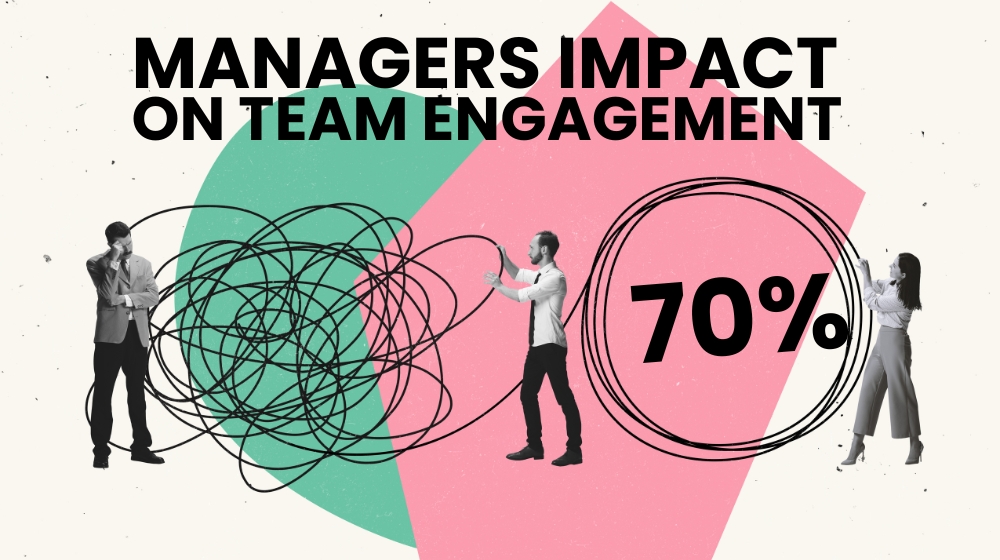
Managers account for 70% of the variance in team engagement.
Read that again.
Not your company perks. Not your mission statement. Not even your compensation packages.
Your managers.
According to Gallup’s extensive workplace research, the quality of an employee’s relationship with their direct manager is the single most powerful predictor of whether they’ll show up engaged, motivated, and committed to excellence.
When managers are engaged themselves, their teams are more than twice as likely to be engaged. When managers are disengaged? The effect cascades downward like a stone dropped into still water, creating ripples of apathy, frustration, and quiet quitting throughout entire departments.
Why Most Organizations Promote the Wrong People Into Management
Let’s be honest about a painful truth in corporate America:
Most people become managers because they were good at their previous job. Not because they have the passion, temperament, or values alignment to lead people effectively.
You had a star salesperson who consistently hit quota? Promote them to sales manager.
You had a brilliant engineer who shipped features on time? Make them an engineering lead.
You had a customer service rep with glowing satisfaction scores? Give them a team to supervise.
The problem? Being good at a job and being good at managing people who do that job are completely different skill sets.
Even worse, they often require completely different passions.
Someone who loves the thrill of closing deals might find the administrative and coaching responsibilities of management soul-crushing. An engineer who finds joy in solving technical problems might dread navigating interpersonal conflicts and performance reviews.
And when you place someone in a management role they don’t genuinely enjoy, you don’t just get one disengaged employee. You get an entire disengaged team.
The Ripple Effect of Manager Disengagement
Think about the last time you worked under a manager who clearly didn’t want to be there.
Maybe they were technically competent but emotionally checked out. They held one-on-ones because HR required it, not because they genuinely cared about your development. They communicated directives from above without context or enthusiasm. They managed tasks, not people.
How did that feel?
Chances are, it drained your motivation. It made you question whether your work mattered. It turned what could have been an energizing role into just another paycheck.
Now multiply that experience across an entire team. Across multiple teams. Across years.
That’s the hidden cost of promoting people into management roles they’re not passionate about. It doesn’t just hurt productivity metrics. It erodes trust, stifles innovation, and drives your best people toward the exit.

What Engaged Managers Actually Do Differently
So what separates managers who elevate their teams from those who drain them?
It’s not just skills or experience. It’s passion for the work of leadership itself.
Engaged managers genuinely enjoy:
- Coaching and developing others rather than just directing tasks
- Facilitating collaboration instead of hoarding control
- Navigating interpersonal dynamics rather than avoiding difficult conversations
- Celebrating team wins more than claiming personal credit
Creating clarity in ambiguous situations
These aren’t just leadership competencies you can train. They’re intrinsic motivations that either energize someone or exhaust them.
A manager who finds genuine fulfillment in these activities shows up differently. They ask better questions. They listen more intently. They notice when someone on their team is struggling and actually care enough to intervene.
Their teams feel it. And they respond by bringing more of themselves to work.
The Manager’s Impact on Employee Engagement Gap
Here’s where most organizations get stuck:
You know manager quality matters. You’ve probably invested in leadership development programs, sent managers to workshops, and created competency frameworks.
But if you’re promoting people into management based primarily on their previous role performance rather than their passion for leadership, you’re solving the wrong problem.
You can teach someone how to conduct a performance review. You can train them on conflict resolution frameworks. You can even coach them on giving feedback.
But you can’t teach someone to genuinely care about developing other people if that’s not what energizes them.
That’s why traditional leadership assessments miss the mark. They measure personality traits, communication styles, and behavioral tendencies. But they don’t measure whether someone will actually find joy and fulfillment in the daily work of management.
How JPTI™ Identifies Natural Leaders
At Careerz Group, we’ve seen this pattern repeatedly: organizations struggle with manager impact on employee engagement not because they lack leadership training, but because they’re placing people in leadership roles they’re not passionate about.
That’s why the Job Passion Type Indicator (JPTI)™ takes a fundamentally different approach to identifying management potential.
Instead of asking “Can this person lead?”, we ask:
“Will this person find genuine fulfillment in the daily work of leadership?”
The JPTI™ assessment measures:
1. Passion for People Development
Does the candidate genuinely enjoy coaching, mentoring, and developing others? Or do they find it draining?
Someone who lights up when helping team members grow will approach management completely differently than someone who views it as a distraction from “real work.”
2. Values Alignment with Leadership Philosophy
Does the candidate’s personal value system align with collaborative, empowering leadership? Or do they value individual achievement and autonomy more highly?
There’s no wrong answer, but there is a wrong fit. Understanding this alignment prevents costly mismatches.
3. Strengths Match for Management Functions
Beyond enjoying leadership in theory, will this person actually enjoy the specific activities management requires? The planning? The communication? The decision-making under ambiguity?
When these three factors align, you get managers who don’t just perform their duties. They thrive in them. And their teams thrive as a result.
 The Three-Step Path to Better Manager Impact on Employee Engagement
Here’s how Careerz Workforce Solutions helps you identify and develop managers who actually want to lead:
- Step 1: Assess Before You Promote
Use the JPTI™ assessment to evaluate management candidates based on their passion for leadership work, not just their performance in their current role.
This prevents the costly mistake of promoting your best individual contributor into a management role they’ll hate. - Step 2: Develop with Purpose
Once you’ve identified people who genuinely enjoy leadership, invest in developing their skills. Training works when the foundation of passion is already there.
People who want to be great managers will absorb coaching, seek feedback, and continuously improve. - Step 3: Realign When Necessary
Sometimes your best managers are currently stuck in individual contributor roles because they’ve never been given the chance to lead.
The JPTI™ helps you uncover hidden leadership talent already in your organization, people whose passions perfectly align with management but who have been overlooked.
What This Means for Your Organization
Improving manager impact on employee engagement isn’t just about sending people to leadership workshops.
It’s about putting the right people in management roles from the start.
When you promote someone who genuinely loves developing others, who finds fulfillment in coaching rather than directing, who values collaboration over control, something remarkable happens:
- Team engagement rises because employees feel genuinely supported
- Turnover drops because people stay for managers they respect
- Innovation increases because managers create psychological safety
- Performance improves because managers unlock potential rather than micromanage
And here’s the best part: it’s measurable.
Organizations that focus on manager impact on employee engagement see dramatic shifts in retention rates, productivity metrics, and employee satisfaction scores within months, not years.
Take the Next Step
You can’t afford to keep promoting people into management roles they’re not passionate about. The cost shows up in every engagement survey, every exit interview, every underperforming team.
But you also can’t wait years to develop better leaders. Your teams need engaged managers now.
Ready to identify who in your organization has the passion profile for leadership?
👉 Sign up for a complimentary trial of the JPTI™ Assessment and discover which candidates will thrive in management roles.
👉 Book a discovery call to explore how passion-based leadership assessment transforms manager impact on employee engagement.

The Bottom Line
Manager impact on employee engagement is the most powerful lever you have for transforming workplace culture.
But improving that impact starts with one critical decision: only promote people who genuinely want to lead.
Skills can be taught. Passion cannot.
The JPTI™ helps you make that distinction before you promote, not after you’ve already created a problem.
Stop settling for managers who were good at something else. Start building a leadership pipeline of people who actually love leading.
The Manager Makes or Breaks Everything
Thank you for following this six-part series on solving the engagement crisis through passion-based hiring. We’ve explored:
- The Hidden Crisis in Today’s Workplace – Why 70% of employees are disengaged
- The Manager Makes or Breaks Everything – How leadership quality drives team engagement
- Remote Work Isn’t the Problem – Why location flexibility matters less than role alignment
- Why “Quiet Quitting” Is Really Loud Misalignment – Understanding the root cause of disengagement
- Building Teams That Actually Work – The science of complementary work styles
- The ROI of Getting Hiring Right the First Time – How passion-based assessment saves money and builds culture
Ready to transform your approach to talent? Start with a complimentary JPTI™ trial assessment today and discover how we achieve measurable hiring ROI improvements within the next quarter.










Share this article
Follow us
A quick overview of the topics covered in this article.