
MIES™ | Multidimensional Introversion-Extraversion Scales
This is an interactive personality test measuring traits
that differ between introverts and extraverts.
Introversion
Obtaining gratification from one’s own mental life.
Extroversion
Obtaining gratification from outside oneself.

MIES
Multidimensional Introversion-Extraversion Scales
Discover your personality blueprint and how it shapes your world.
What it does
MIES breaks down introversion and extraversion into multiple dimensions, providing a nuanced understanding of social energy and interaction styles.
What you’ll gain
> Go beyond labels: see the full spectrum of your social tendencies
> Understand when you thrive in solitude vs. collaboration
> Leverage your natural style for productivity and well-being
What you receive
A simple profile of your energy style across key dimensions. Clear tips for your workday, plus action ideas to shape your schedule, meetings, collaboration, and recovery so you stay balanced and perform at your best.
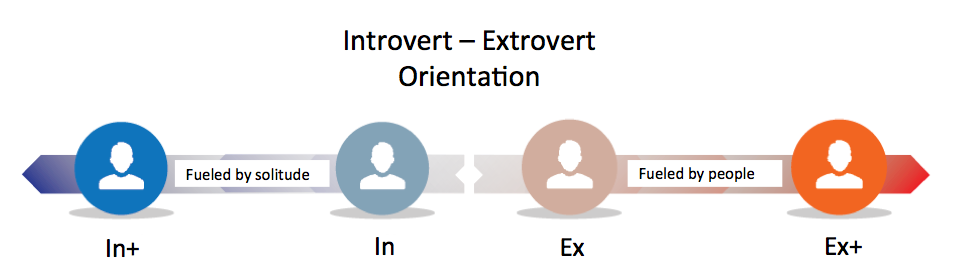
TAKING THE TEST | What to Expect: The test has 91 statements of opinion that you must rate on a five point scale of how much you agree with each. It should take most people 10-15 minutes to complete.

Extraversion
Extraversion is the condition of mostly deriving satisfaction from external sources. Extraverts are generally passionate, chatty, forceful, and social. They like being around other people. Being with other people gives extraverts energy and makes them feel good. They enjoy things like parties, community events, public demonstrations, and corporate or political groups that bring a lot of people together. They also tend to do better when they collaborate with others. An extraverted individual probably likes being around other people more than being alone. When they are with other people, they tend to feel more invigorated, and when they are alone, they are more likely to get bored.
Introversion
People usually think of introverts as being more reserved or thoughtful. Some well-known psychologists have said that introverts are persons whose energy grows when they think about things and shrinks when they talk to other people. Reading, journaling, and meditating are some of the things that introverts enjoy doing alone. An introvert probably likes being alone more than being with a lot of other people. Some people have even described introversion as a desire for a peaceful, less exciting outside world. This is because introverts are often overwhelmed by too much stimulation from social events and interactions. They like to focus on one thing at a time and watch things happen before they join in.
12 Tips for Introverts & Extraverts
Action ideas to shape your schedule, meetings, collaboration, and recovery so you stay balanced and perform at your best. Here are practical, work-focused tips for each style. No fluff, just moves you can use.
If you lean Introvert
-
Protect focus time. Block your best two hours for deep work and treat them like meetings.
-
Batch social time. Cluster meetings into one or two windows, then give yourself short recovery breaks.
-
Prep to speak. Jot three points before a meeting and share one early to set your voice in the room.
-
Influence in writing. Follow up with clear notes, options, and a recommendation.
-
Build trust 1:1. Schedule short coffees to grow your network without the noise of big groups.
-
Reset quickly. After heavy collaboration, take a five-minute walk or quiet reset to recharge.
Working well together
-
Agree on signals. Decide when to use chat, email, or meetings, and how fast replies are expected.
-
Mix formats. Pair quick standups with written summaries so both styles stay informed.
-
Rotate strengths. Let extraverts lead brainstorms and intros. Let introverts lead synthesis and plans.
Why extraversion shows up at the top
Across large samples, researchers find that people in higher management levels score higher on extraversion than those lower in the hierarchy. Studies comparing non-managers, managers, and executives report a positive link between managerial level and extraversion, with senior leaders scoring higher on average.
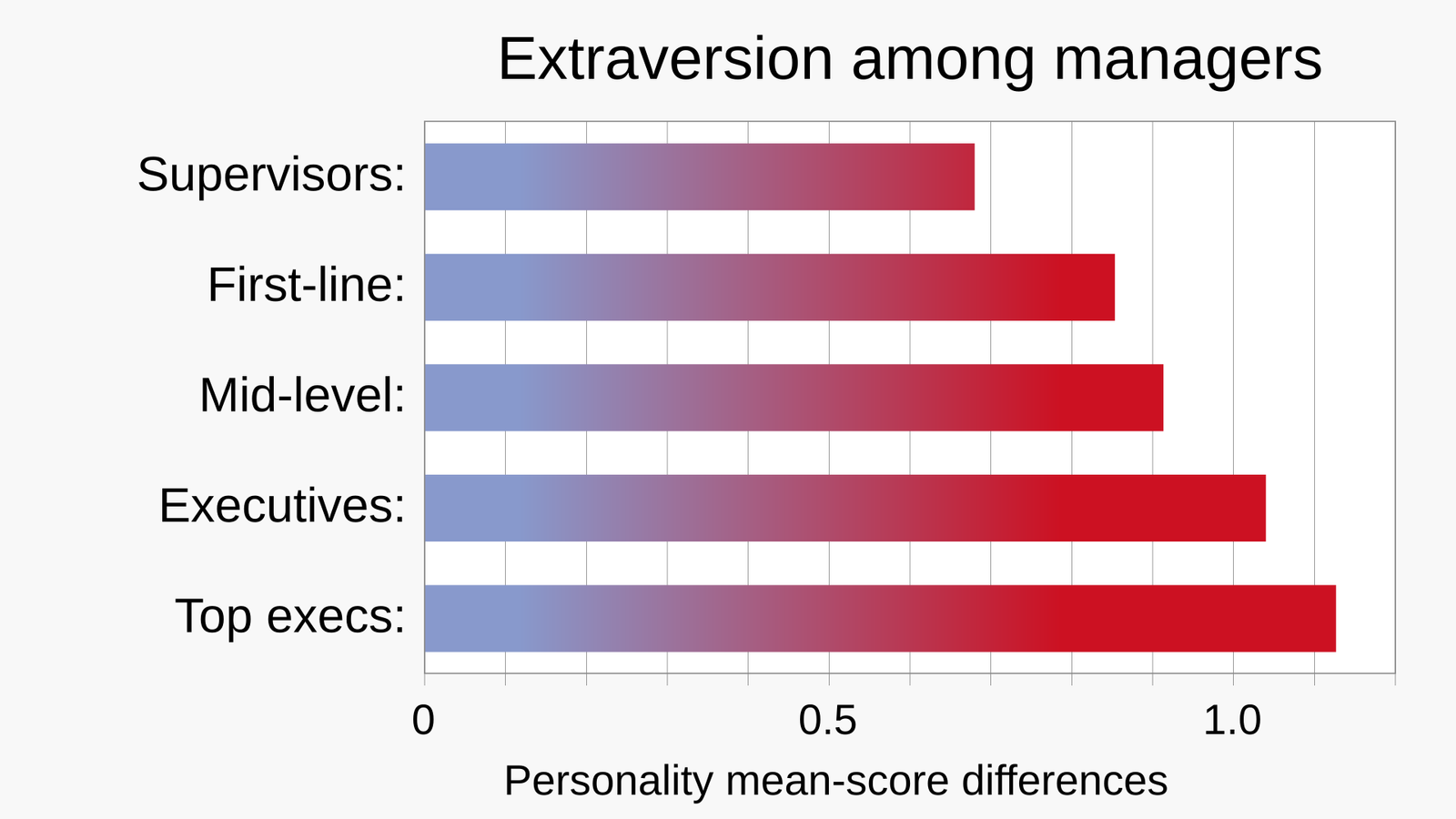
Research indicates that the prevalence of extraversion is greater for people at progressively higher management levels.
 Want to be in senior leadership
& you’re an introvert?
Great news. You do not need to become the loudest voice in the room.
Senior roles reward clear thinking, steady judgment, and follow through. You already have a head start.
What to expect
There will be more important conversations. More people will look to you for answers. Give yourself a little space between big moments so you can think and respond well.
How to use your strengths
Prepare quietly. Jot a few notes before a meeting.
Stay calm. Name the goal, name the options, choose one.
Listen first. Reflect what you heard, then add your view.
How to speak so people listen
Start with the point. Then add two details.
Use short sentences. Pause.
If you need a moment, say so. People respect honesty.

Meetings that feel better
Send a short note ahead with the question you want to discuss.
In the room, begin with the headline. End with who will do what and by when.
Invite two quieter voices to speak. It raises the quality of the discussion.
Energy and time
Protect a block of time for thinking each day. Treat it like an appointment and block your schedule.
Group your most social tasks in the same part of the day, whenever you have extra energy.
Take a five-minute walk after heavy or long conversations.
Stay visible without being “on stage”
Write a short weekly update. Wins, risks, decisions, and one ask for the reader to get back to you on.
Hold small roundtables with people two levels down. Listen more than you talk.
Share credit in public with those sharing great ideas or helpful work. It builds trust.

Feedback Circles: Relationships that support you
Keep a simple list of five sponsors and ten peers. Check in with them on a regular cadence.
Ask for specific help. EG: “I plan to decide X by Friday. Here is where I need your support. (advice, advocate, be contrarian)”
Offer help first when you can.
When tension shows up here’s what to do
Separate the person from the problem.
Restate the shared goal. Offer two practical paths.
If opinions clash, suggest a small trial and a time to review.
A simple 90 day plan to level up
First month. Listen, learn the players, pick three outcomes, and fix one simple thing.
Second month. Set a steady rhythm for meetings and decisions.
Third month. Deliver two visible improvements for the company or department and share a six-month plan that names risks and resources for further improvements you want to lead.
Simple phrases you can use to position yourself as a leader
“Here is the decision. Here are the tradeoffs. I recommend option B.”
“What would change your mind. Let us try it for two weeks and review the results.”
“Thank you for flagging that risk. Here is how we will monitor and mitigate it.”
You do not need to act like someone else. A few clear habits will let people see your good judgment, and your voice will carry more clout with managers.