
Building Teams That Actually Work The Science of Complementary Work Styles
Why Some Teams Click and Others Clash
You’ve seen it before.
One team seems to operate like a well-oiled machine. They anticipate each other’s needs, divide work naturally, and deliver results that exceed the sum of individual contributions. Meetings are productive. Collaboration feels effortless. Conflict, when it arises, gets resolved constructively.
Another team, equally talented on paper, struggles constantly. Communication breakdowns. Duplicated effort. Personality conflicts. Projects that drag on forever. Meetings that go nowhere.
Same organization. Same resources. Same performance expectations.
Completely different outcomes.
The difference isn’t about individual talent or technical skills. It’s about how team members’ work styles complement or conflict with each other.
And here’s the part most organizations miss: you can’t team-build your way out of fundamental work style incompatibility. No amount of trust falls or escape rooms will fix a team that’s structurally misaligned from the start.
 The Hidden Structure of High-Performing Teams
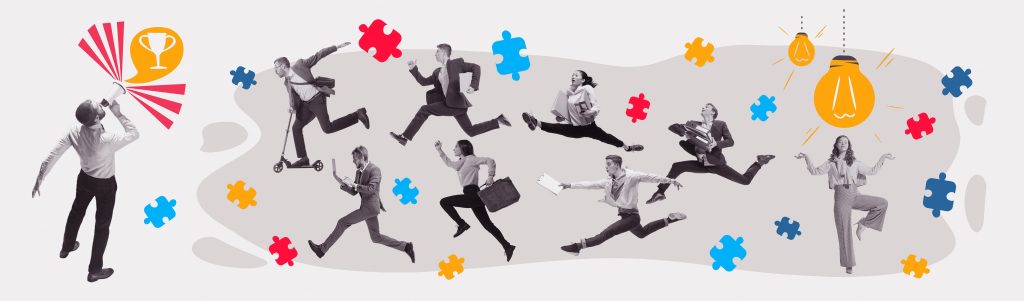
Gallup’s research consistently shows that high-performing teams aren’t just collections of talented individuals.
They’re carefully balanced ecosystems where different work styles and strengths complement each other rather than compete or clash.
Think about what actually needs to happen for a team to succeed:
- Someone needs to generate big-picture vision and strategy
- Someone needs to translate vision into actionable plans
- Someone needs to execute details with precision
- Someone needs to ensure quality and catch mistakes
- Someone needs to facilitate communication and resolve conflicts
- Someone needs to drive accountability and keep things moving
- No single person excels at all of these things. And that’s perfectly fine.
Problems arise when you build teams where everyone gravitates toward the same strengths while critical functions go neglected. Or when work style differences create friction because no one understands why teammates approach problems so differently.
The Three Types of Team Building Mistakes
Most team building failures stem from one of three fundamental errors:
1. The “All-Star” Trap
You assemble your most talented individual contributors and assume they’ll automatically function well together.
But if they all prefer working independently, who’s going to coordinate? If they’re all big-picture thinkers, who’s handling execution details? If they’re all competitive high-achievers, who’s fostering collaboration?
Talent without complementary work styles creates teams that underperform despite exceptional individual capabilities.
2. The Clone Effect
You hire people who think and work like you do because they’re easy to understand and manage.
But homogeneous teams create blind spots. Everyone gravitates toward the same approaches. No one challenges assumptions. Critical perspectives and strengths go missing.
Teams need diversity of thought and work style to solve complex problems effectively.
3. The Random Assembly
You group people based on availability, department structure, or who happens to be free.
Without any consideration of how work styles will interact, you’re essentially hoping for compatibility. Sometimes you get lucky. Often you don’t.
And when work style conflicts emerge, you blame “personality clashes” rather than recognizing you’ve created structural dysfunction.

What Complementary Work Styles Actually Mean
Let’s get specific about what team building around complementary work styles involves.
It’s not about everyone being friends or having similar personalities. It’s about ensuring the team has a balanced distribution of:
Strategic vs. Tactical Orientation
Some people naturally think in big-picture terms. They excel at vision, strategy, and seeing patterns across complex information.
Others naturally think in practical, concrete terms. They excel at execution, process, and translating ideas into actionable steps.
Both are essential. A team full of strategists generates brilliant ideas that never get implemented. A team full of tacticians executes efficiently without clear direction.
Independent vs. Collaborative Preference
Some people do their best work independently. They need focused time to think deeply, solve problems, and produce high-quality output.
Others do their best work collaboratively. They think out loud, generate ideas through discussion, and draw energy from real-time interaction.
Both approaches are valuable. A team full of independent workers struggles with coordination. A team full of collaborative workers never achieves deep focus.
Decisive vs. Deliberative Approach
Some people make decisions quickly based on available information. They value speed and are comfortable with some uncertainty.
Others make decisions carefully after thorough analysis. They value accuracy and want to minimize risk.
Both styles serve important functions. All decisive action without deliberation leads to costly mistakes. All deliberation without decisiveness leads to paralysis.
Why Traditional Team Building Assessments Fall Short
Most organizations use personality assessments like Myers-Briggs or DISC for team building.
These tools provide useful insights about communication preferences and behavioral tendencies. But they don’t tell you what actually matters most for team performance: whether someone will find joy and fulfillment in the specific role they need to play on the team.
You might learn that someone is detail-oriented. But will they actually enjoy being the person who catches errors and ensures quality? Or will that role drain them over time?
You might discover someone is extroverted. But does that mean they genuinely love facilitating collaboration? Or do they prefer competitive individual achievement?
Personality describes tendencies.
Passion describes what energizes someone.
And in team building, energy sustainability matters more than behavioral tendencies.
How Careerz Group Workforce Solutions Builds Balanced Teams
At Careerz Group, we approach team building differently.
Instead of grouping people by department, availability, or personality type, we help you build teams where work styles naturally complement each other.
The Workforce Edition of the JPTI™ reveals:
1. Natural Work Style Preferences
The assessment identifies whether each team member gravitates toward strategic or tactical work, independent or collaborative approaches, and decisive or deliberative decision-making.
This allows you to intentionally balance teams so all necessary functions are covered by people who genuinely enjoy those roles.
2. Passion for Team Functions
Beyond identifying work styles, the JPTI™ measures whether someone will find fulfillment in the specific role the team needs them to play.
This ensures team building creates sustainable balance, not forced role assignments that breed resentment.
3. Values Alignment Across Team Members
The assessment reveals whether team members share core values even while bringing different work styles.
This creates what we call “aligned diversity”: different approaches united by shared purpose and values.

The Three-Step Path to Effective Team Building
Careerz Group Workforce Solutions helps you build teams that perform from day one:
Step 1: Map Team Composition
Use the Workforce Edition of the JPTI™ to assess current team members’ work styles and passion profiles.
This reveals where you have redundancy (too many people gravitating toward the same roles) and where you have gaps (critical functions no one naturally enjoys).
Step 2: Fill Gaps Strategically
When adding new team members, hire specifically for the work styles and passions your team is missing.
If everyone on your team loves strategy but avoids execution details, your next hire should be someone who finds fulfillment in tactical implementation.
Step 3: Align Roles to Passions
Adjust individual responsibilities based on what naturally energizes each team member.
Rather than forcing rigid role definitions, let work style passions shape how the team divides responsibilities.
What Happens When Team Building Gets It Right
When you build teams around complementary work styles rather than just assembling talented individuals:
- Communication improves because people understand their differences are functional, not problematic. The strategic thinker isn’t being vague. The detail-oriented person isn’t being nitpicky. They’re bringing necessary perspectives.
- Conflict decreases because work style differences create productive tension rather than personal friction. People appreciate what teammates contribute instead of judging how they work.
- Productivity increases because all necessary team functions get handled by people who genuinely enjoy those roles. Nothing falls through the cracks. No one is constantly forcing themselves to do work that drains them.
- Innovation accelerates because diverse work styles generate richer solutions. The independent thinker brings deep analysis. The collaborative thinker brings rapid iteration. Together they create better outcomes than either would alone.
- Retention improves because team members feel valued for their unique contributions rather than pressured to conform to a single way of working.
The Team Building Question That Changes Everything
Stop asking: “Who are my best individual performers who should work together?”
Start asking: “What work styles does this team need to succeed, and who will genuinely thrive in each of those roles?”
That shift in thinking transforms team building from a personnel decision into a strategic design process.
You stop hoping for compatibility and start engineering it intentionally.
Ready to build teams where work styles complement rather than clash?
👉 Sign up for a complimentary trial of the JPTI™ Assessment and discover your team’s work style composition.
👉 Book a discovery call to explore how Careerz Group Workforce Solutions helps you design high-performing teams through complementary work styles.
The Bottom Line
Great teams aren’t accidents. They’re the result of intentional team building that balances complementary work styles.
You can’t personality-test your way to that balance. You need to understand what energizes each person and ensure the team covers all necessary functions with people who genuinely enjoy their roles.
The Workforce Edition of the JPTI™ gives you that insight before you assemble teams, not after they’re already struggling.
Stop leaving team building to chance. Start designing teams where complementary work styles create unstoppable collective performance.
Thank you for following this six-part series on solving the engagement crisis through passion-based hiring. We’ve explored:
- The Hidden Crisis in Today’s Workplace – Why 70% of employees are disengaged
- The Manager Makes or Breaks Everything – How leadership quality drives team engagement
- Remote Work Isn’t the Problem – Why location flexibility matters less than role alignment
- Why “Quiet Quitting” Is Really Loud Misalignment – Understanding the root cause of disengagement
- Building Teams That Actually Work – The science of complementary work styles
- The ROI of Getting Hiring Right the First Time – How passion-based assessment saves money and builds culture
Ready to transform your approach to talent? Start with a complimentary JPTI™ trial assessment today and discover how we achieve measurable hiring ROI improvements within the next quarter.







Share this article
Follow us
A quick overview of the topics covered in this article.
Latest articles
February 24, 2026