
Remote Work Isn’t the Problem. Bad Fit Is.
Remote Work Isn’t the Problem. Bad Fit Is.
Why Location Flexibility Matters Less Than Role Alignment
The Great Remote Work Debate Is Missing the Point
Ever since the pandemic forced millions of employees to work from home, leaders have been locked in a heated debate:
Does remote work kill productivity and engagement? Or does it liberate employees to do their best work?
Some CEOs have mandated full returns to the office, convinced that collaboration requires physical proximity. Others have embraced permanent remote models, trusting employees to deliver results from anywhere.
But here’s what Gallup’s latest research reveals: both sides are arguing about the wrong thing.
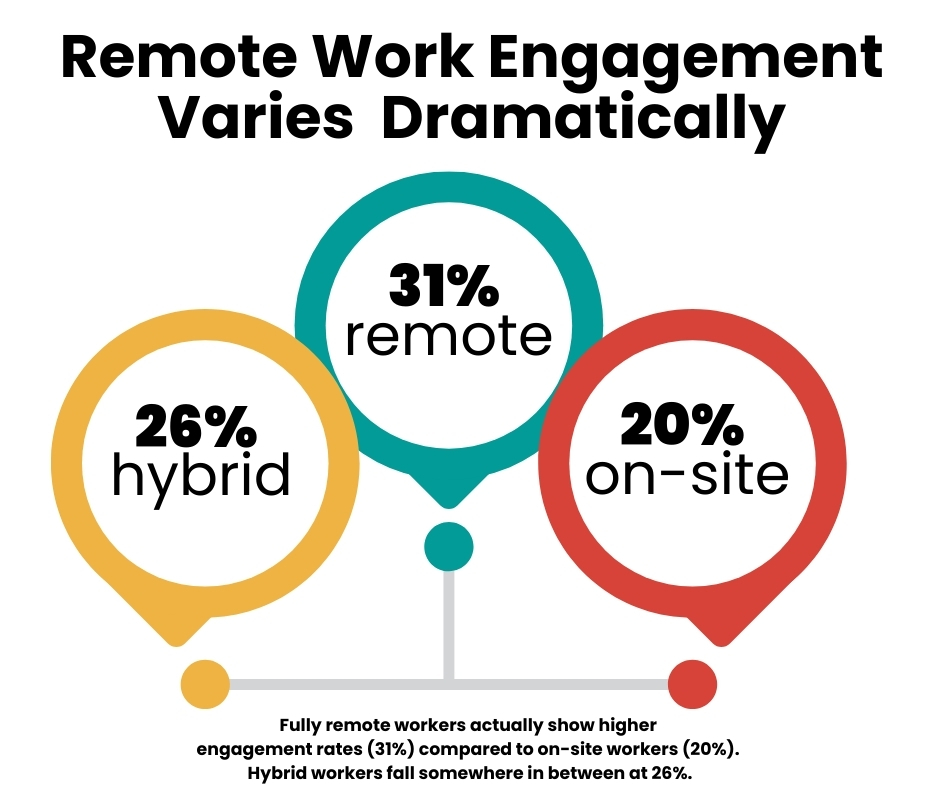
Fully remote workers actually show higher engagement rates (31%) compared to on-site workers (20%). Hybrid workers fall somewhere in between at 26%.
The real issue isn’t where people work. It’s whether they’re in roles that align with how they naturally prefer to work in the first place.

Why Remote Work Engagement Varies So Dramatically
Think about your own team for a moment.
You probably have employees who thrive working remotely. They’re self-directed, communicate proactively, and deliver exceptional results without needing face-to-face supervision.
You also probably have employees who struggle in remote environments. They miss the spontaneous collaboration, feel isolated, and find it harder to stay motivated without the structure and social energy of an office.
Same company. Same policies. Completely different outcomes.
Why?
Because remote work engagement isn’t about the location itself. It’s about whether someone’s natural work style, communication preferences, and intrinsic motivations align with the autonomy and independence that remote work requires.
Some people are energized by working independently. They find deep focus in solitude and prefer asynchronous communication that gives them time to think before responding.
Others are energized by real-time collaboration. They think out loud, draw energy from social interaction, and find isolation draining rather than liberating.
Neither approach is better. But putting someone in a work environment that conflicts with their natural preferences is a recipe for disengagement.
The Hidden Cost of Remote Work Misalignment
Here’s what happens when you force a one-size-fits-all approach to work location:
Scenario 1: You mandate full-time office attendance
Your highly autonomous employees who thrive on deep, uninterrupted work feel micromanaged and resentful. They lose two hours daily to commuting. They struggle to focus in open office environments. Their productivity drops. Eventually, they start interviewing elsewhere.
Scenario 2: You mandate full-time remote work
Your collaboration-oriented employees who draw energy from spontaneous interactions feel isolated and disconnected. They struggle to build relationships over Zoom. They miss the creative energy of brainstorming in person. Their engagement plummets.
Either way, you’ve created a problem not because of your policy itself, but because you applied it universally without considering individual work style preferences.
That’s the real remote work engagement challenge: matching people to environments where they’ll naturally flourish.
What High Remote Work Engagement Actually Requires
When remote work succeeds, it’s not just because of good technology or flexible policies.
It’s because the right people are in remote roles.
Employees who show high remote work engagement typically:
- Find autonomy energizing rather than anxiety-inducing
- Communicate proactively without needing prompts
- Self-manage effectively without external structure
- Prefer written communication that allows for thoughtful responses
- Draw energy from focused, independent work
These aren’t skills you can easily train. They’re intrinsic preferences and natural work styles.
Someone who thinks best in collaborative, real-time environments won’t suddenly become comfortable working in isolation just because you give them Slack and a standing desk.
And someone who does their best thinking in quiet solitude won’t suddenly thrive in a bustling office just because you add more collaboration spaces.
How Traditional Assessments Miss Work Environment Fit
Most organizations evaluate candidates based on skills, experience, and cultural values.
All important. But none of them tell you whether someone will thrive in a remote, hybrid, or on-site environment.
Personality assessments might give you clues. An introvert might prefer remote work, right?
Not necessarily. We’ve seen introverts who struggle with remote isolation and extroverts who love the flexibility and autonomy of working from home.
The missing piece isn’t personality. It’s work style passion alignment.
Will this person genuinely enjoy the autonomy and independence of remote work? Or will they find it lonely and disconnecting?
Will they find fulfillment in asynchronous collaboration? Or do they need the real-time feedback and social energy of in-person interaction?
These questions determine remote work engagement far more than whether someone prefers small gatherings to large parties.

How Careerz Group Workforce Solutions Identifies Optimal Work Environments
At Careerz Group, we help HR leaders solve the remote work engagement puzzle through the Workforce Edition of the JPTI™.
Instead of making blanket assumptions about who should work where, we measure:
1. Autonomy Preference
Does this candidate find independence energizing or isolating?
Someone with high autonomy preference will thrive in remote environments where they can structure their own day, work at their own pace, and make decisions independently.
Someone with low autonomy preference will struggle without regular check-ins, collaborative brainstorming, and the social structure of an office environment.
2. Communication Style Alignment
Does this person prefer asynchronous, thoughtful communication (ideal for remote work) or real-time, spontaneous interaction (better suited for office environments)?
Remote work engagement depends heavily on whether someone’s natural communication style matches the predominantly asynchronous nature of distributed teams.
3. Collaboration Passion
Does this candidate draw energy from independent deep work or from real-time collaboration?
Understanding this helps you determine not just whether someone can work remotely, but whether they’ll genuinely enjoy it day after day.
 The Three-Step Path to Optimizing Remote Work Engagement
Careerz Group Workforce Solutions helps you match people to work environments where they’ll naturally excel:
Step 1: Assess Work Style Preferences
Use the Workforce Edition of the JPTI™ to evaluate candidates’ and employees’ natural work style preferences before making location decisions.
This prevents the costly mistake of forcing high-autonomy workers back to offices or isolating collaboration-oriented employees in permanent remote roles.
Step 2: Create Flexible, Intentional Policies
Once you understand individual preferences, create policies that accommodate different work styles rather than mandating one approach for everyone.
Maybe your engineering team thrives remotely while your sales team needs the energy of shared space. That’s not a failure of consistency. That’s smart alignment.
Step 3: Match Roles to Environment
When hiring, consider work environment as part of job fit from the start.
If a role genuinely requires in-person collaboration, hire people who thrive in that environment. If it’s perfectly suited for remote work, hire people who find autonomy energizing.
What This Means for Your Remote Work Strategy
Improving remote work engagement isn’t about choosing between office mandates and remote-first policies.
It’s about understanding who thrives where and building flexibility around that reality.
When you align work environments with individual preferences:
- Productivity rises because people work in conditions that energize them
- Retention improves because employees feel their preferences are respected
- Engagement increases because people aren’t fighting against their natural work style
- Collaboration strengthens because you’ve intentionally designed teams around complementary preferences
You stop arguing about whether remote work “works” and start building systems where the right people work in the right places.
The Real Question to Ask
Stop asking: “Should we allow remote work?”
Start asking: “Which of our roles and people are best suited for remote, hybrid, or on-site work, and how do we align accordingly?”
That shift in thinking transforms remote work from a policy debate into a strategic talent optimization opportunity.
Ready to understand which of your employees and candidates will thrive in remote environments?
👉 Sign up for a complimentary trial of the JPTI™ Workforce Assessment and discover each person’s optimal work environment preferences.
👉 Book a discovery call to explore how Careerz Group Workforce Solutions can help you build flexible, high-performing teams.
The Bottom Line
Remote work engagement isn’t determined by your policies. It’s determined by whether people are working in environments aligned with their natural preferences.
Location flexibility is valuable. But only when paired with the insight to match individuals to environments where they’ll genuinely flourish.
The Workforce Edition of the JPTI™ gives you that insight before you make costly work arrangement decisions.
Stop debating remote versus office. Start optimizing for individual alignment.
Your bottom line will be glad you did!
Thank you for following this six-part series on solving the engagement crisis through passion-based hiring. We’ve explored:
- The Hidden Crisis in Today’s Workplace – Why 70% of employees are disengaged
- The Manager Makes or Breaks Everything – How leadership quality drives team engagement
- Remote Work Isn’t the Problem – Why location flexibility matters less than role alignment
- Why “Quiet Quitting” Is Really Loud Misalignment – Understanding the root cause of disengagement
- Building Teams That Actually Work – The science of complementary work styles
- The ROI of Getting Hiring Right the First Time – How passion-based assessment saves money and builds culture
Ready to transform your approach to talent? Start with a complimentary JPTI™ trial assessment today and discover how we achieve measurable hiring ROI improvements within the next quarter.










Share this article
Follow us
A quick overview of the topics covered in this article.
- Why Location Flexibility Matters Less Than Role Alignment
- Why Remote Work Engagement Varies So Dramatically
- The Hidden Cost of Remote Work Misalignment
- How Traditional Assessments Miss Work Environment Fit
- How Careerz Group Workforce Solutions Identifies Optimal Work Environments
- The Three-Step Path to Optimizing Remote Work Engagement
- The Bottom Line
- Building Teams That Actually Work The Science of Complementary Work Styles
- The ROI of Getting Hiring Right the First Time
- Remote Work Isn’t the Problem. Bad Fit Is.
- The Manager Makes or Breaks Everything
- Employee Disengagement Crisis: How Passion-Based Hiring Solves It
- Using JPTI for better hiring, building stronger teams, and retention
- Why JPTI Is the Missing Link to “Best Fit” Careers
- Relationship Between Passion-Driven Work and Job Satisfaction
- Why Retention and Development Eclipse Recruitment as HR’s Top Priority for 2026
- How values and passions align with career satisfaction and fulfillment
- Retention Starts With Fit. Not Perks.
Latest articles
February 24, 2026