
Career Advice,Career Stage,Management & Leaders,Personality,Sequel,Shifter,Sidelined,Starter,Striver,Stuck,Student,Uncategorized
12 Tips for Introverts & Extraverts
Extraversion
Extraversion is the condition of mostly deriving satisfaction from external sources. Extraverts are generally passionate, chatty, forceful, and social. They like being around other people. Being with other people gives extraverts energy and makes them feel good. They enjoy things like parties, community events, public demonstrations, and corporate or political groups that bring a lot of people together. They also tend to do better when they collaborate with others. An extraverted individual probably likes being around other people more than being alone. When they are with other people, they tend to feel more invigorated, and when they are alone, they are more likely to get bored.
Introversion
People usually think of introverts as being more reserved or thoughtful. Some well-known psychologists have said that introverts are persons whose energy grows when they think about things and shrinks when they talk to other people. Reading, journaling, and meditating are some of the things that introverts enjoy doing alone. An introvert probably likes being alone more than being with a lot of other people. Some people have even described introversion as a desire for a peaceful, less exciting outside world. This is because introverts are often overwhelmed by too much stimulation from social events and interactions. They like to focus on one thing at a time and watch things happen before they join in.
 12 Tips for Introverts & Extraverts
Action ideas to shape your schedule, meetings, collaboration, and recovery so you stay balanced and perform at your best. Here are practical, work-focused tips for each style. No fluff, just moves you can use.
If you lean Introvert
- Protect focus time. Block your best two hours for deep work and treat them like meetings.
- Batch social time. Cluster meetings into one or two windows, then give yourself short recovery breaks.
- Prep to speak. Jot three points before a meeting and share one early to set your voice in the room.
- Influence in writing. Follow up with clear notes, options, and a recommendation.
- Build trust 1:1. Schedule short coffees to grow your network without the noise of big groups.
- Reset quickly. After heavy collaboration, take a five-minute walk or quiet reset to recharge.
If you lean Extravert
- Start with a plan. List the top three outcomes for the day so energy has a direction.
- Add quiet blocks. Book two 30-minute no-meeting windows to finish what you start.
- Share the air. In meetings, pause after key points and invite two voices in.
- Channel enthusiasm. Turn ideas into next steps, owners, and deadlines before the meeting ends.
- Watch overcommitment. Use a visible task board to track promises and keep scope realistic.
- Close with reflection. Spend five minutes after big interactions to capture decisions and lessons.
Working well together
- Agree on signals. Decide when to use chat, email, or meetings, and how fast replies are expected.
- Mix formats. Pair quick standups with written summaries so both styles stay informed.
- Rotate strengths. Let extraverts lead brainstorms and intros. Let introverts lead synthesis and plans.
Why extraversion shows up among mangers and senior leaders
Across large samples, researchers find that people in higher management levels score higher on extraversion than those lower in the hierarchy. Studies comparing non-managers, managers, and executives report a positive link between managerial level and extraversion, with senior leaders scoring higher on average.
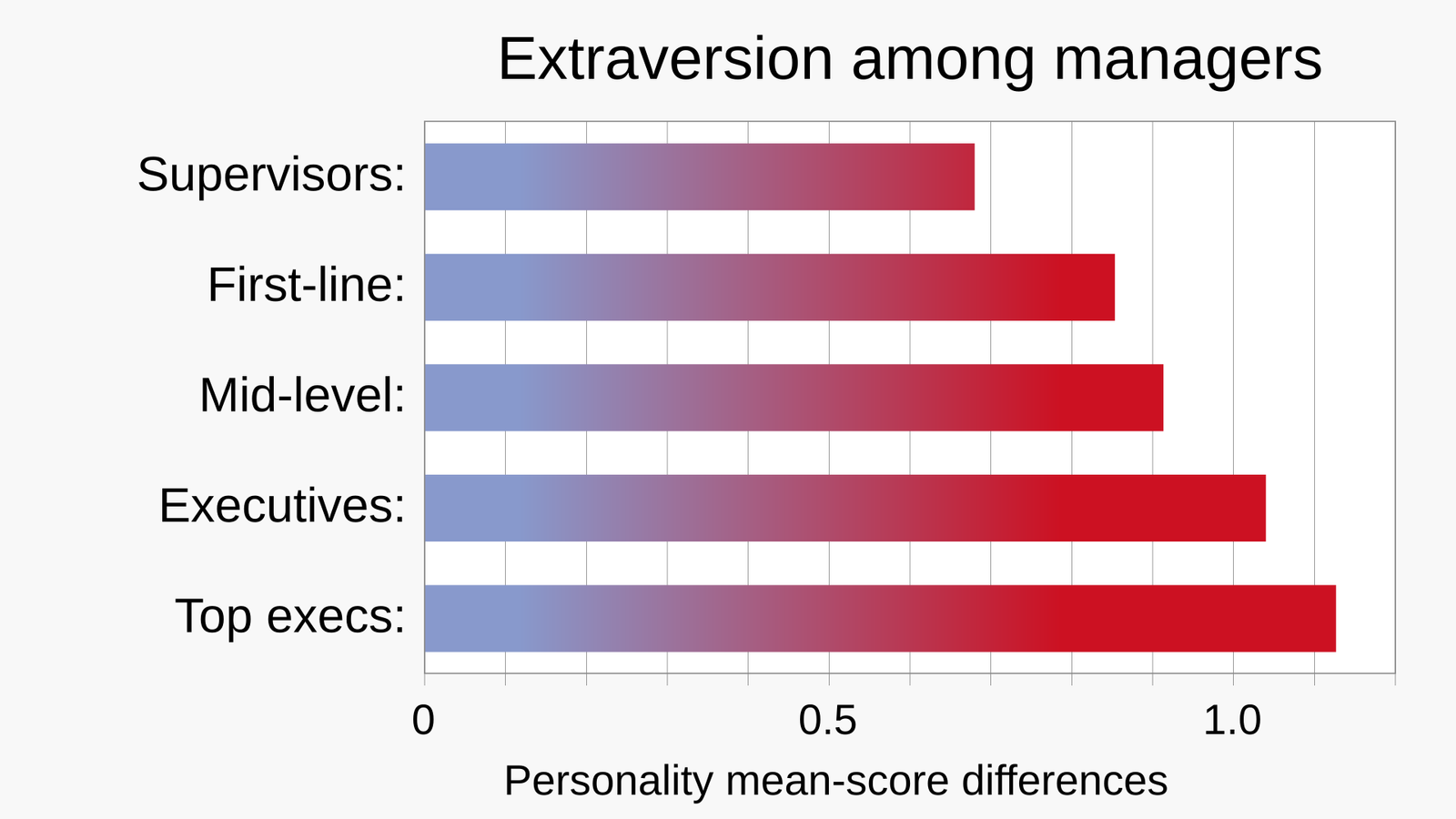
Research indicates that the prevalence of extraversion is greater for people at progressively higher management levels.
Want to be in senior leadership & you’re an introvert?
Great news. You do not need to become the loudest voice in the room.
Read this article about what you can do to with that leadership seat!
Discover more about Introverts & Extraverts:
Share this article
Follow us
A quick overview of the topics covered in this article.